
An effective pool lighting setup is a lot more than just making your outdoor space look good at night. Good pool lighting can create a safer environment, increase visibility on wet surfaces, highlight landscape features and create an enjoyable atmosphere to entertain in during the evening hours. If you are looking for a luxurious backyard experience or just safer pool access, professional lighting design helps balance function, style and long term performance.
Why Lighting Around a Pool Matters
Lighting is vital around the swimming pool since it is necessary for ensuring both safety and entertainment. The wet surface can become slippery once it gets dark, causing visibility challenges when navigating the steps, paths and changes in elevation.
Lighting is not only helpful for security but also increases the usability of your outdoor area. While previously you could only use your pool during daytime, you will now be able to swim, entertain yourself and relax late into the night. Additionally, professionally installed lighting highlights landscaping, architectural features and outdoor living spaces and provides an elegant resort look to your property.
Many homeowners focus only on lighting the pool itself. In reality, pathways, seating areas, steps and transitions often require more attention because these are the locations where accidents are most likely to occur.
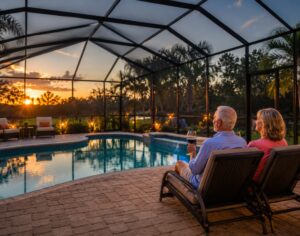
Best Types of Lights Around a Swimming Pool
Path Lights
Path lighting is normally used in the surroundings of the swimming pool along the pathways in order to help with visibility and to navigate around safely at night. Path lighting is ideal for pathways, garden paths, and transitional zones between outdoor spaces. The main strengths of this type of lighting include safety, visibility, and an appealing look, which helps improve the entire landscape design. However, if they are spaced too far apart, dark areas can develop between fixtures and reduce their effectiveness.
Step Lights
The step lights will serve the purpose of lighting up stairs and retaining walls as well as changes in the level within the pool area. Step lights are very helpful on steps leading into a pool, patios, decks, and stairways because visibility is key to safety. The drawback here is that they should be strategically placed in order to light up all the steps uniformly.
Deck Lights
Deck lights are designed for installation directly into the material of the deck or on the sides of the deck surrounding pools. The fixtures are ideally suited for use in decks surrounding pools, seating areas, and outdoor entertainment areas where a softer light is required. The low-profile design of these fixtures results in an unobtrusive look without causing any bright glare. However, since they need to be fixed in the deck, their positioning requires careful planning.
Wall Lights
Wall-mounted fixtures provide both decorative and functional lighting around pool areas. They are commonly installed on pool houses, outdoor kitchens, covered patios and exterior walls to deliver broad illumination while enhancing the property’s appearance. Their ability to light larger areas makes them a practical choice for many homeowners. If positioned incorrectly, however, they can create unwanted glare that affects comfort and visibility.
Landscape Accent Lights
Landscape accent lights are used to highlight trees, palm trees, shrubs, water features and architectural details surrounding the pool. They are ideal for creating focal points and adding depth to the overall design. These fixtures help create a luxury resort style atmosphere while showcasing the beauty of the landscape after sunset. The main drawback is that using too many accent lights can make the area feel cluttered and overly busy.
String Lights
String lights are a popular choice for homeowners who want to create a warm and inviting atmosphere around their pool. They work best when installed on pergolas, patios, seating areas and outdoor entertainment spaces. Their affordability and decorative appeal make them a favorite for gatherings and evening relaxation. However, they are primarily designed for ambiance and provide limited functional lighting compared to other fixture types.
Recessed Lighting
Recessed lighting is built directly into ceilings, hardscape, or architectural features to provide illumination without visible fixtures. It is commonly used in covered patios, outdoor kitchens, and modern pool designs where a clean, streamlined appearance is desired. These fixtures offer excellent lighting while maintaining a sophisticated look. Their main limitation is that installation is generally more complex and often requires professional planning.
Pool Cage or Enclosure Lighting
For homes with screened enclosures, pool cage lighting helps provide balanced illumination throughout the space while maintaining a clean and organized appearance. These fixtures are best suited for screened pool cages and covered pool areas where consistent lighting is important. They improve visibility, increase usability after dark and help eliminate shadows throughout the enclosure. Proper fixture selection and placement are essential to achieve the best results.
Smart LED Lighting
Smart LED lighting systems allow homeowners to control brightness levels, schedules, colors and lighting zones using a smartphone or home automation system. They are ideal for modern pool environments and outdoor entertainment areas where flexibility and convenience are priorities. In addition to being energy efficient, smart lighting offers customization options that make it easy to create different moods for various occasions. The primary limitation is the higher upfront investment compared to traditional lighting systems.
Safety Rules for Outdoor Lighting Around Pool Areas
The safety of people in the pool area is always the first thing that should be considered when installing the lights outdoors. This is because water and electricity will be present, and therefore the lighting system should always be installed through special fixtures that will be able to withstand the pool environment.
The electrical wiring and components have to be properly insulated and installed according to applicable building and electrical codes. The swimming pool lighting system needs to have appropriate GFCI protection and electrical connections that will ensure safety.
Florida pool electrical systems must comply with National Electrical Code requirements, and many pools used after dark require adequate artificial lighting to meet safety standards.
Never attempt complex electrical work around a pool unless you are properly licensed and qualified. Water and electricity can create serious safety risks when installations are performed incorrectly.
Professional installers like Highlight Outdoor Lighting carefully plan fixture locations, wiring routes and electrical protection systems before installation begins. This helps prevent future safety issues and ensures long-term system reliability.
Pool Lighting Design Ideas
The most commonly used option is soft perimeter lighting that softly lights up the perimeter of the pool area without causing any over-brightening of the place.
Path lights along walkways serve to illuminate the path and make it safer for guests. Landscape accent lighting can also be applied to show off palm trees, tropical plants, water features, and other architectural highlights of the landscaping that would otherwise become invisible after sunset.
Lighting for steps, retaining walls, and other elevation changes should also be provided to increase the level of safety there. It is also possible to use under coping lighting and hardscape lighting.
For screened enclosures, LED pool cage lighting provides balanced illumination throughout the space while maintaining a clean design. Many homeowners also choose smart lighting systems that allow separate dimming zones for entertaining, swimming, dining and relaxation.
The most successful pool lighting designs use multiple layers of light rather than relying on one bright fixture. Layered lighting creates better visibility, improves aesthetics, and reduces glare.
Common Pool Lighting Mistakes
One of the biggest mistakes homeowners make is using too much brightness. Excessive lighting can create harsh reflections on water surfaces and reduce overall comfort around the pool.
Another common issue is using cool white lighting everywhere. While bright white lights may seem practical, they often create a commercial appearance rather than the warm, inviting atmosphere most homeowners want.
Poor fixture placement can also lead to unwanted glare in seating areas or uneven lighting throughout the space. Cheap fixtures frequently fail in humid climates and may require replacement much sooner than higher quality alternatives.
Many homeowners overlook the impact of pool cages or enclosures during the design process. Lighting that works well in an open area may perform differently once reflections and enclosure structures are considered.
Failing to create separate lighting zones is another common mistake. Pool areas often serve multiple purposes and different activities may require different lighting levels.
Dividing a pool area into separate lighting zones allows homeowners to adjust brightness based on how the space is being used, improving both comfort and energy efficiency.
FAQs
What is the best lighting around a pool?
A combination of path lights, step lights, accent lighting and smart LED controls typically provides the best balance of safety, visibility and aesthetics.
How do you light a pool area safely?
Use wet-rated fixtures, proper GFCI protection, code compliant installation methods and professional design to ensure safe operation around water.
Can lights be installed around an existing pool?
Yes. Most existing pools can be upgraded with professionally installed lighting systems without major structural modifications.
Are LED lights good around swimming pools?
Yes. LED lights are energy efficient, long-lasting, durable and available in a wide range of brightness levels and color temperatures.
What color temperature is best around a pool?
Most professionals recommend warm white lighting between 2700K and 3000K because it creates a comfortable and inviting atmosphere.
How many lights are needed around a pool?
The number depends on pool size, surrounding landscaping, deck layout and desired lighting effects. A professional lighting plan provides the most accurate recommendation.
Should pool lighting be professionally installed?
Professional installation helps ensure safety, code compliance, proper fixture placement and long term performance. Especially in environments where water and electricity are present.
Final Thoughts
The best way to light up a pool area would be to integrate all these qualities of safety, visibility, comfort and even aesthetics into one. Effective outdoor pool lighting provides easy navigation in the dark, improves outdoor living areas and creates an ideal environment for homeowners who wish to have their dream backyard.
Rather than focusing only on appearance, successful pool lighting plans balance functionality with aesthetics. Working with experienced outdoor lighting professionals like Highlight Outdoor Lighting helps ensure the system is safe, durable, and designed specifically for your property’s unique layout and needs.