
Low voltage landscape lighting is a simple solution to improve the appearance of your property at night. It improves safety, brightens your yard and makes paths more visible after dark.
If you are a homeowner asking how to install low voltage landscape lighting, this is the guide for you. It has been created for beginners who are unfamiliar with basic instructions and simple terminology.
Outdoor low voltage lights can be installed safely if properly planned. And if the project becomes too complicated, professional assistance is always available.
What Is Low Voltage Landscape Lighting?
Low voltage landscape lighting runs on a 12 volt system. This is much lower than standard household electricity.
Because of this, it is safer to handle and easier to install. Many homeowners choose it for basic outdoor lighting projects.
Low voltage landscape lighting is commonly used for:
- Pathways and driveways
- Gardens and flower beds
- Trees and outdoor features
A proper low voltage landscape lighting installation improves visibility without harsh brightness.
Tools and Materials You’ll Need to Install the Lighting
A successful lighting installation starts with proper preparation. Having the right tools and materials ensures safer wiring and better results.
- Low voltage landscape lights
- Low voltage landscape lighting transformer
- Landscape lighting wire
- Waterproof wire connectors
- Shovel or trenching tool
- Mounting screws or stakes
- Outdoor rated electrical outlet
Having the right materials before you start makes the job smoother and safer.
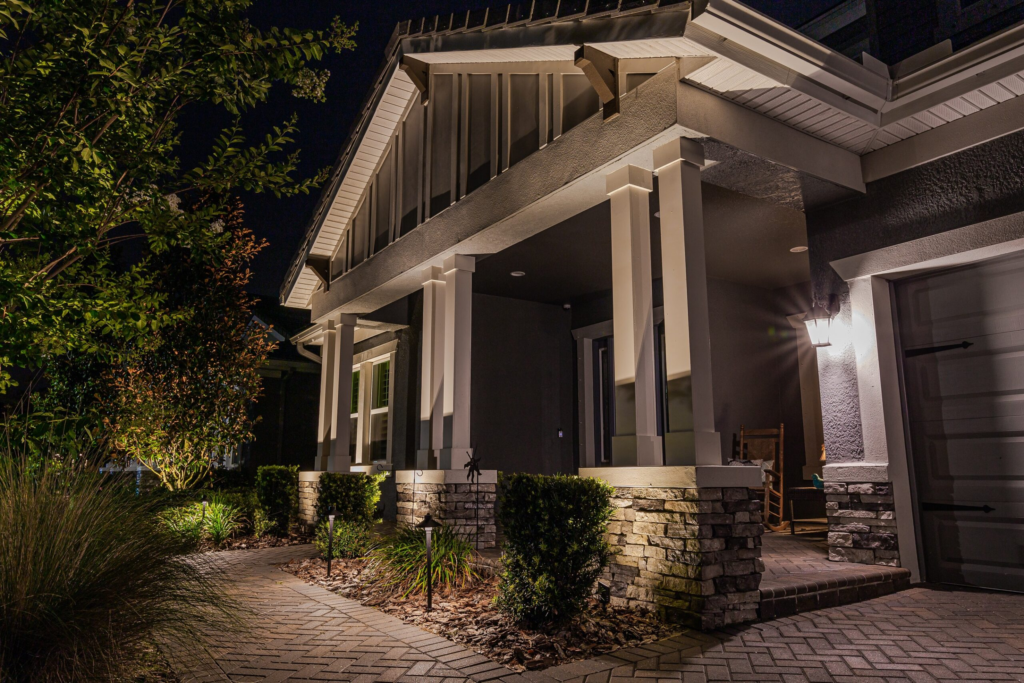
Step-by-Step Installation Guide
Step 1: Plan Your Lighting Layout
Start by walking around your yard at night. This helps you see dark areas that need light.
Decide where lighting will improve safety or appearance. Paths, steps and entry points are good places to start.
Avoid placing lights too close together. Even spacing looks better and prevents harsh glare during landscape lighting installation.
Step 2: Install the Transformer
The transformer is the heart of the system. It reduces standard power to a safe 12 volts.
Mount the transformer close to an outdoor outlet. It should be off the ground and protected from water.
When planning landscape lighting transformer installation, check the total wattage. Add up all light watt ratings and stay below the transformer limit. Never overload a low voltage landscape lighting transformer.
Step 3: Connect the Wiring
Lay out the landscape lighting wire along your planned route. Keep it neat and close to where fixtures will go.
Wire size matters. Using the correct landscape lighting wire gauge helps prevent dim lights and power loss.
Bury the wire just a few inches deep. Use waterproof connectors for all landscape lighting wiring connections to avoid moisture problems.
Step 4: Install and Position the Fixtures
Push each fixture stake firmly into the soil. Make sure it feels stable and straight.
Before locking them in place, turn the lights on. Adjust angles so the light falls where you want it.
For outdoor low voltage lighting, avoid pointing lights directly at windows or neighbors’ homes.
Step 5: Test and Adjust the Lighting
Turn the system on after dark. Walk the area and check how everything looks.
If some lights are dimmer, it may be due to a voltage drop or landscape lighting issues. This often happens when wire runs are too long.
Adjust spacing or re-balance the layout until the lighting looks even and clean.
Common Mistakes to Avoid
Small mistakes during installation can cause lights to look dim, uneven or stop working over time. These problems often appear weeks or months after setup.
Here are some common landscape lighting installation mistakes to avoid:
- Using the wrong landscape lighting wire gauge
- Overloading the transformer
- Placing fixtures too close together
- Ignoring the voltage drop over long wire runs
Avoiding these common landscape lighting installation mistakes helps your system stay bright, safe and reliable for many years.
DIY vs Professional Installation
DIY installation can save money upfront. Many basic systems are homeowner friendly.
However, professionals know how to avoid wiring errors, poor layout and voltage problems. They also plan lighting for long term performance. Professional landscape lighting installation frequently leads to increased brightness, a cleaner design and fewer future repairs. If you prefer a system designed and installed correctly from the start, explore our professional landscape lighting services to see how experts handle layout, wiring, and long-term performance.
Professionals also handle proper transformer sizing and wiring selection to avoid future failures. This guarantees that the system is dependable and appealing as your outside space changes over time.
When to Hire a Landscape Lighting Professional
Knowing when to seek professional assistance can save you time and prevent costly blunders. While simple tasks are frequently achievable, larger or more complex setups necessitate skilled planning.
You should consider expert help if:
- Your property is large or has multiple outdoor areas
- The design includes many fixtures or different lighting zones
- You experience repeated electrical or wiring issues
Professional installers understand spacing, voltage balance and proper transformer use. Highlight Outdoor specializes in professional landscape lighting installation, creating systems that look balanced, stay bright and work reliably for years.
Hiring experts reduces risk, improves performance and protects your investment long term.
FAQs
1) How deep should landscape lighting wire be buried?
Landscape lighting wire should be buried about 3 to 6 inches deep. This protects it while keeping installation simple.
2) What size transformer do I need?
Add up the wattage of all lights, then choose a transformer with extra capacity. This supports future expansion.
3) Can I install low voltage landscape lighting myself?
Yes, basic systems are DIY-friendly. However, complex layouts may benefit from professional help.
4) Why are my low voltage landscape lights dim?
Dim lights are often caused by voltage drop, landscape lighting issues or incorrect wire gauge.
Conclusion
Learning how to install low voltage landscape lighting can significantly improve how your property appears and feels at night. Many homeowners can do basic installations with careful planning, the right equipment, and safe wiring.
To achieve the most significant results, always test and adapt your outdoor low voltage lights.
If you want a system that works well and lasts for years, contacting Highlight Outdoor is a good next step. Their experience ensures that your lighting is properly installed the first time. Learn more about complete landscape lighting installation services and how we design reliable outdoor lighting systems for long-term performance.
Low voltage landscape lighting improves aesthetics, safety, and value. Installed properly, it changes your outdoor environment after dark.