
A well-lit dock does much more than make a waterfront property look attractive after sunset. The right lighting on your dock will ensure better visibility, safety around the water area, easy docking of boats and increase your usage of the waterfront property. It doesn’t matter whether you have a private dock, marina, pier or waterfront property; proper lighting will create a safe and functional waterfront property for you.
Companies like Highlight Outdoor Lighting specialize in low voltage LED dock lighting systems. It is designed to withstand Florida’s harsh coastal conditions, including humidity, salt air, UV exposure and storms. Professional Dock Lighting Installation ensures the system performs reliably for years while avoiding many of the common problems found in DIY installations.
What Is Dock Lighting?
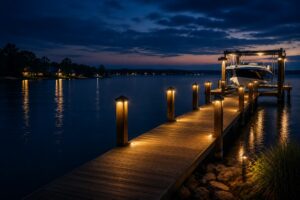
Dock lights are a type of outdoor lights that give light to the perimeter of a boat dock, pier, seawall, marina or waterfront structures for better visibility, security, navigation and aesthetics in the dark. The lights are installed to illuminate the walkway, edges of the dock, boat slips, stairs and the waterfront.
How Dock Lights Work
Knowing the basic facts about dock lights enables the owner to make more informed choices in planning for a dock lighting system.
Most professional dock lighting installation systems use low voltage LEDs. Such systems are energy efficient, long lasting and much safer to install in waterfront areas compared to high voltage systems.
Fixtures
Lighting fixtures are the visible components that provide illumination. Different fixture types serve different purposes, such as lighting pathways, highlighting dock posts or improving visibility near boat slips.
Low-Voltage Wiring
Underground or concealed wiring connects fixtures throughout the dock system. Low voltage wiring reduces energy consumption and provides a safer solution around water.
Transformer
A transformer converts standard household electricity into low-voltage power suitable for dock lighting. Professional installers carefully size transformers to support the number of fixtures being installed.
LED Bulbs
Modern dock lighting systems rely on LED technology because LEDs consume less electricity and often last between 30,000 and 50,000 hours. They also produce less heat and require less maintenance than older lighting technologies.
Timers and Smart Controls
Many systems include timers, photocells or smart controls that automatically turn lights on at sunset and off at a scheduled time. Smart controls can often be managed through a mobile app.
Strategic Placement
Fixtures are typically installed around:
- Dock posts
- Pilings
- Walkways
- Boat slips
- Dock entrances
- Steps
- Seating areas
- Waterfront pathways
Proper placement creates safe visibility without producing excessive glare.
Many dock owners assume brighter lights create a safer dock. In reality, excessive brightness often causes glare on the water, making it harder for boaters to judge distance and dock safely. Professional installers focus on balanced lighting rather than maximum brightness.
Main Types of Dock Lighting
Different areas of a dock require different lighting solutions. A professional design often combines several fixture types for the best results.
Piling Lights
Piling lights are mounted directly on dock pilings or support posts to improve visibility and help define the edges of the dock after dark.
- Best Use: Defining dock boundaries, guiding boat navigation and improving visibility around slips.
- Pros: Excellent visibility, attractive appearance and easier identification of dock edges at night.
- Limitations: Requires marine-grade fixtures and constant exposure to harsh waterfront conditions can increase wear over time.
Post Cap Lights
Post cap lights are installed on top of dock posts and add a decorative glow while helping mark the dock perimeter.
- Best Use: Dock perimeter lighting and decorative accent lighting.
- Pros: Clean appearance, soft illumination and easy integration into most dock designs.
- Limitations: Provides limited light spread and may need to be paired with other fixtures.
Pathway Lights
Pathway lights illuminate walking surfaces and help create a safer route along the dock.
- Best Use: Dock walkways, waterfront paths and access points.
- Pros: Improves walking safety and helps reduce trip hazards.
- Limitations: Requires proper spacing to avoid dark spots between fixtures.
Step Lights
Step lights are installed on stairs, ramps and elevated platforms to improve visibility where elevation changes occur.
- Best Use: Dock stairs, access ramps and elevated platforms.
- Pros: Increases safety and helps prevent nighttime slips and falls.
- Limitations: More complex installation compared to standard pathway lighting.
Underwater Dock Lights
Underwater dock lights are installed below the waterline to create a dramatic visual effect around the dock.
- Best Use: Waterfront ambiance, fish attraction and visual enhancement.
- Pros: Creates a striking appearance and adds a premium waterfront feel.
- Limitations: Higher installation costs and greater maintenance requirements.
Solar Dock Lights
Solar dock lights operate using sunlight and do not require traditional electrical wiring.
- Best Use: Remote dock locations and supplemental lighting applications.
- Pros: Easy installation and no electrical wiring required.
- Limitations: Performance depends on sunlight availability and brightness is often lower than wired systems.
LED Flood and Accent Lights
LED flood and accent lights provide broader illumination for larger dock areas and waterfront gathering spaces.
- Best Use: Boat slips, entertainment areas and security lighting.
- Pros: Wide coverage and strong visibility.
- Limitations: Can create glare if not properly positioned.
Motion and Security Lights
Motion activated lights automatically turn on when movement is detected around the dock.
- Best Use: Security zones, dock entrances and equipment storage areas.
- Pros: Energy efficient and improves property security.
- Limitations: Not ideal as the primary source of dock lighting.
Benefits of Professional Dock Lighting Installation
Safer Walking at Night
Waterfront environments naturally present slip, trip and fall risks. Professional lighting clearly defines walking surfaces, steps and transitions.
Easier Boat Docking
Returning to the dock after sunset becomes significantly easier when slips, pilings, and dock edges are properly illuminated.
Better Visibility Near Water Edges
Proper lighting helps prevent accidents by making waterfront boundaries easier to see.
Improved Waterfront Aesthetics
Well-designed lighting highlights architectural features, landscaping, docks and shoreline elements while creating an inviting atmosphere.
Better Usability After Sunset
Dock lighting extends the usable hours of your waterfront property for entertaining, fishing, relaxing, and boating.
Higher Perceived Property Value
Professional outdoor lighting often increases curb appeal and creates a more premium appearance.
Longer-Lasting Performance
Marine grade fixtures, corrosion resistant materials and professional installation techniques help systems survive Florida’s demanding waterfront conditions.
Why DIY Dock Lighting Often Fails
Many homeowners attempt DIY installations to save money but encounter problems within a few years.
Poor Fixture Quality
Store bought fixtures are often not designed for waterfront environments and may fail prematurely.
Wrong Waterproof Rating
Not all outdoor fixtures are suitable for marine environments. Water intrusion can quickly damage electrical components.
Voltage Drop
Long wiring runs can reduce fixture brightness if the system is not properly designed.
Exposed Wiring
Improperly protected wiring can become damaged by weather, water and dock movement.
Corrosion Problems
Salt air accelerates corrosion. Standard fixtures and connectors may deteriorate rapidly.
Poor Fixture Spacing
Uneven spacing creates dark spots or excessive brightness.
Water Glare
Lights aimed incorrectly can reflect off the water and reduce visibility for boaters. Professional designs often use shielded optics to control glare.
No Maintenance Plan
Even quality systems need occasional inspection and maintenance.
Dock Lighting Design Tips
An effective dock light design involves ensuring that there is adequate lighting without making the place too bright. Having more light does not guarantee success because too much lighting might be too harsh, leading to a poor nighttime experience for people on the dock or boat.
The best lighting equipment that most lighting experts advise is warm, glare-free LED lights since they are capable of creating a friendly environment and at the same time provide sufficient light visibility. Special attention should be taken for transition points like dock entries, stairs, connecting walkways, edges of the docks and boat slips.
Light pollution can also be avoided by ensuring that all fixtures are correctly aimed in the right direction and not into adjacent sites and near the water body. Layered lighting is among the best lighting design techniques, whereby various fixture types are used.
Instead of focusing on one strong light source, professional dock lighting can involve the use of pathway lights, piling lights, step lights, and accent lights, all of which contribute to creating a safe and attractive environment without compromising the serene waterfront experience.
What Affects Dock Lighting Installation Cost?
Dock lighting costs vary depending on the complexity of the project.
| Installation Type | Estimated Cost |
| Basic Residential Dock Lighting | $1,500–$3,000 |
| Medium-Sized Professional System | $3,000–$7,000 |
| Large Waterfront Lighting System | $7,000–$15,000+ |
| Underwater Lighting Addition | $500–$2,000+ per fixture |
| Smart Control Upgrade | $300–$1,500+ |
These estimates vary based on local labor rates, fixture quality and site conditions. A professional consultation provides the most accurate pricing.
Main Cost Factors
- Dock Size: Larger docks need more fixtures and wiring.
- Number of Fixtures: More fixtures increase equipment and labor costs.
- Wiring Access: Existing conduits and easier access points reduce installation complexity.
- Transformer Size: Larger systems require higher capacity transformers.
- Fixture Material: Marine-grade brass and corrosion-resistant aluminum fixtures cost more but last significantly longer.
- Underwater vs. Above-Water Lighting: Underwater systems generally involve higher equipment and installation costs.
- Smart Controls: App controlled systems add convenience but increase project costs.
- Coastal Exposure: Properties exposed to salt spray and harsh weather often require premium materials.
Professional Dock Lighting Installation Process
Professional installers follow a structured process to ensure reliable long-term performance.
Site Inspection
The property and dock are carefully evaluated.
Dock Safety and Layout Review
Potential hazards, access points and boat traffic patterns are identified.
Lighting Design Plan
A custom layout is created based on safety needs and aesthetic goals.
Fixture Selection
Marine-grade fixtures are selected for the environment and application.
Low Voltage Wiring and Transformer Setup
Wiring is installed and protected according to professional standards.
Testing at Night
The system is tested after dark to verify coverage and identify any glare issues.
Final Adjustment
Fixture angles and brightness levels are fine-tuned.
Maintenance Guidance
Property owners receive recommendations for inspections and routine care.
This design-first approach is similar to the process used by professional outdoor lighting companies such as Highlight Outdoor Lighting. This includes consultation, design, installation, testing and system fine tuning.
FAQs
Are LED dock lights better?
Yes. LED dock lights use less energy, last longer, require less maintenance and perform well in marine environments.
Can dock lights be installed on an existing dock?
Yes. Most existing docks can be retrofitted with professionally installed lighting systems.
Is professional dock lighting worth it?
Professional installation improves safety, reliability, aesthetics and long term performance while reducing maintenance issues.
What type of dock lighting is best for Florida?
Marine grade LED lighting with corrosion resistant materials is generally the best choice for Florida’s humid and salt-air conditions.
How long does dock lighting installation take?
Most residential projects take one to three days, depending on dock size and system complexity.
Do dock lights need maintenance?
Yes. Fixtures, wiring connections, and transformers should be inspected periodically to ensure optimal performance and safety.
Final Thoughts
Dock lighting systems are one of the best additions that an individual can add to their waterfront property. Not only do they improve safety, but they also make nighttime navigation easy, add beauty to the waterfront and help you continue using your dock even during the night hours.
Although DIY systems can be tempting, waterfront environments require quality materials and proper electrical planning. Choosing Highlight Outdoor Lighting is a smart choice when buying a professionally designed and installed dock lighting system in Florida’s harsh environment.