
When it comes to choosing between LED and traditional lighting on your dock, LED lighting is usually the better choice for a Florida waterfront. LEDs utilize less electricity and have a longer lifespan. It provides dependable lighting in the coastal region when marine-grade products are used.
Traditional halogen or incandescent lighting can still provide bright light. However, they typically consume more electricity and emit more heat. In many cases, especially for a new system installation, the safer, more efficient and cost-effective option will involve professional LED dock lighting installation services.
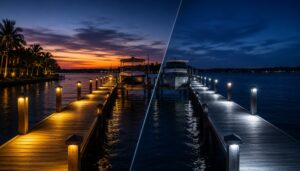
LED vs Traditional Dock Lighting: What’s the Difference?
The biggest difference comes down to how the two lighting technologies produce light.
Traditional options such as halogen bulbs use more electricity and produce considerable heat while operating. They also tend to need more frequent bulb replacement.
LEDs work differently. They use a semiconductor to produce light and are much more energy efficient. They also produce less heat and typically have a much longer service life.
For a dock, these differences matter. Waterfront lighting is exposed to moisture, humidity, storms and, in coastal areas, salt air. A lighting system needs to do more than look good on installation day. It needs to continue working reliably in a demanding outdoor environment.
Why LED Dock Lights Work Well in Florida
Florida waterfront properties face conditions that can be hard on outdoor fixtures. Humidity, salt exposure, intense sunlight, wind-driven rain and storms can all contribute to premature wear.
That makes fixture quality particularly important.
Highlight Outdoor Lighting uses marine-grade LED fixtures and corrosion-resistant materials designed for Florida’s coastal conditions. Its dock lighting systems are also low voltage, with properly rated transformers, waterproof connections and protected wiring.
The technology itself is only part of the solution. The fixtures, wiring, connections and installation method all need to be appropriate for the environment.
LED Dock Lights Benefits Homeowners Notice
There are several reasons homeowners are moving toward LED systems for docks.
Lower Energy Use
One of the clearest advantages of LEDs is energy efficiency.
LED fixtures can produce useful illumination while consuming less electricity than traditional halogen lighting. That matters when your dock lights operate every evening.
Lower energy consumption can help reduce operating costs over the life of the system.
Longer Fixture Life
LEDs generally last much longer than traditional bulbs. That means fewer bulb changes and less time spent maintaining fixtures around the dock.
This is especially useful for waterfront properties where reaching a fixture may not always be easy.
A light mounted on a dock post, boat lift or another elevated structure should not require frequent attention. A longer-lasting LED fixture can reduce that maintenance burden.
Less Heat
Traditional halogen bulbs generate substantial heat. LEDs operate at much lower temperatures.
That does not mean LEDs never become warm, but they generally produce far less heat than halogen lighting.
For outdoor applications, this can make LED technology a practical choice when you want reliable illumination without the heat associated with older lighting technologies.
Consistent Illumination
A professionally designed LED system can provide consistent light across important areas of the dock.
Fixtures can be positioned to illuminate walkways, dock edges, piling caps, boat lifts, steps and other areas where visibility matters.
The goal isn’t to make the entire waterfront extremely bright. Good lighting should provide enough visibility without creating uncomfortable glare.
LED vs Halogen Dock Lights: Which Should You Choose?
When comparing LED vs halogen dock lights, LED generally has the advantage for long-term residential use.
Halogen fixtures can provide warm, attractive light and may have a lower upfront fixture cost in some situations. However, they typically consume more electricity and require more frequent bulb replacement.
LED fixtures cost more upfront in some cases, but their efficiency and longer operating life can make them a better long-term investment.
For a Florida dock, there is another factor to consider: environmental exposure.
A high-quality LED fixture designed for marine or coastal use is better suited to this application than a standard fixture that was never designed for repeated exposure to moisture and salt air.
Practical Installer Insight: Don’t Overlight the Water
One of the most common mistakes with waterfront lighting is focusing too much on brightness.
More light does not automatically mean better visibility.
When a fixture shines directly across the water, the reflection can create glare. This can be distracting for someone walking on the dock and especially problematic for someone approaching by boat.
A professional installer should consider fixture angle, mounting height, spacing and brightness before installation.
At Highlight Outdoor Lighting, dock layouts are evaluated based on factors such as dock structure, boat lift configuration, desired brightness and exposure to salt and weather. Fixtures are then positioned for balanced coverage without overwhelming glare.
What Professional LED Dock Lighting Installation Involves
A good installation starts well before anyone mounts a light.
The installer should first assess the property and dock layout. This includes looking at the dock’s size, structural features, electrical access, boat lift and areas where visibility is most important.
The next step is fixture selection and placement.
Marine-grade fixtures should be selected according to the mounting location, desired brightness, environmental exposure and overall design.
The wiring should then be installed neatly and securely. Waterproof connections and protected routing are especially important in a waterfront environment.
Finally, each fixture should be tested and adjusted. The installer can fine-tune the positioning to remove dark spots, reduce glare and create a balanced appearance.
When Traditional Dock Lighting May Still Make Sense
LED is usually the stronger choice for a new dock lighting system, but that does not mean traditional lighting is automatically wrong.
A homeowner with an existing traditional system may decide to keep it if the fixtures are still working well and replacement parts are readily available.
However, when the system reaches the point where bulbs, wiring or fixtures need frequent attention, upgrading to LED can make sense.
An installer can evaluate the existing setup and determine whether a full replacement or a more limited upgrade is appropriate.
How to Get the Most From LED Dock Lighting
Choosing LED fixtures is only the first step.
The design should match the way you use your waterfront property.
If you regularly return by boat after dark, prioritize visibility around the approach, dock edge and boat lift. If you spend more time entertaining outdoors, consider ambient lighting around seating areas and the dock perimeter.
For a dock used primarily for walking, step and pathway lighting may be more important.
You can also combine different fixture types rather than relying on one light throughout the entire dock. Highlight Outdoor Lighting installation options, including piling cap lights, recessed fixtures, side-mounted lights, step lighting, under-rail lighting and boat-lift lighting.
Make the Switch to LED Dock Lighting
So, are LED dock lights better? For most Florida waterfront homeowners, they are a smart choice. LED technology offers energy efficiency, long service life, lower maintenance and dependable illumination when paired with quality fixtures designed for coastal conditions.
But the best results come from more than simply replacing old bulbs with LEDs. The system needs to be designed around your dock, boat, waterfront activities and local environment.
Highlight Outdoor Lighting provides custom LED dock lighting installation throughout Florida’s Space Coast and Treasure Coast. The team designs low-voltage systems using professional-grade LED fixtures and components selected for Florida’s humidity, salt air and outdoor conditions. Services include piling cap lighting, boat lift lighting, dock-edge illumination, step lighting and other customized solutions.
If your existing dock lighting is outdated or you are planning a new waterfront lighting system, a professional consultation can help you determine which fixtures, layout and controls make sense for your property.
Frequently Asked Questions
Are LED dock lights better than traditional lights?
For most new residential dock installations, yes. LEDs typically use less energy, last longer, produce less heat and require less maintenance than traditional halogen lighting. The fixture must still be properly rated for the waterfront environment.
How long do LED dock lights last?
The service life varies by fixture and manufacturer. Quality LED systems can provide many years of use, especially when they are properly installed and maintained.
Are LED dock lights expensive?
The initial cost can be higher than some traditional lighting options. However, lower energy use, longer fixture life and fewer replacements can make LEDs more economical over time.
Can LED dock lights be used around saltwater?
Yes, but the fixture and other components should be selected specifically for the environment. Marine-grade and corrosion-resistant materials are particularly important for Florida waterfront properties.
Can LED dock lights cause glare on the water?
They can if they are positioned incorrectly. A good lighting design considers fixture angle, brightness and placement to illuminate the dock without creating unnecessary glare across the water.