
If you are thinking about installing DIY pool cage lighting, take a moment before you start drilling, wiring or buying fixtures. Pool areas require more planning than a typical backyard because water, electricity, wet surfaces and metal structures are all close together.
Simple battery-powered or solar decorative lights may be suitable for some DIY projects. But hardwired pool cage lighting is better left to a qualified professional. A professional can choose appropriate fixtures, plan the wiring, reduce glare and make sure the finished system is safe, practical and suited to your outdoor space.
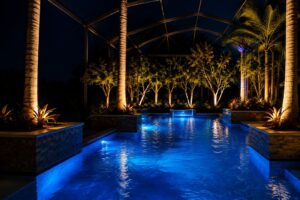
DIY Pool Cage Lighting: What Can You Safely Handle?
Not every outdoor lighting project requires professional installation.
Some simple decorative options can be handled by a homeowner. Solar-powered lights, battery-operated lanterns and removable accent lights generally involve less electrical work than a permanent lighting system.
For example, you might place solar lights around a pool deck or use outdoor-rated decorative fixtures to add a soft glow around a seating area. These projects can be a good way to experiment with different styles before committing to a permanent system.
However, the situation changes when your project involves electrical wiring, connections, transformers, junction boxes or permanent fixtures. That’s where professional help becomes much more important.
When DIY Becomes Risky
A swimming pool is not the place to learn electrical wiring through trial and error.
Water conducts electricity and electrical systems around pools have specific safety requirements. The exact requirements can also depend on the type of fixture, its location, the electrical system and local codes.
If you are installing permanent lighting that connects to your home’s electrical system. It is best to have the work handled by a qualified professional who understands pool-area electrical requirements.
This is particularly important if the project involves running new wiring, connecting fixtures to a power source or modifying an existing electrical system.
Saving money on installation isn’t worth creating a dangerous situation.
Lighting Around a Pool Should Serve a Purpose
When planning Lighting Around a Pool, start by asking how you use the space after sunset.
- Do you swim at night?
- Do you host guests around the pool?
- Do children walk around the deck after dark?
- Do you have steps leading into the pool area?
- Do you spend evenings on a nearby patio or outdoor kitchen?
Your answers should influence the lighting design.
Pool Cage Lighting Ideas Worth Considering
There are plenty of ways to make a screened pool enclosure more inviting at night.
String Lights
String lights can create a relaxed atmosphere around a pool cage. They work particularly well around outdoor seating and entertaining areas.
However, they should be rated for outdoor use and installed in a way that keeps cords and connections away from water.
Downlighting
Fixtures mounted above the pool area can provide broad illumination without requiring numerous individual lights.
When positioned correctly, downlighting can create a soft effect across the deck and surrounding areas.
Accent Lighting
Small accent fixtures can highlight plants, architectural details, columns or decorative features around the pool.
This type of lighting adds visual interest without making the entire space overly bright.
Step Lighting
If your pool deck includes steps, focused lighting can make those areas easier to see at night.
Step lighting can also add a polished appearance when fixtures are carefully integrated into the surrounding design.
Landscape Lighting
The pool cage should not be treated as an isolated space.
Lighting nearby trees, palms, planting beds or pathways can make the entire backyard feel more connected.
This is particularly useful when the pool area opens onto a larger outdoor living space.
Think About Night Pool Lights Beyond the Pool
When homeowners search for night pool lights, they often focus entirely on the water. But the area surrounding the pool matters just as much.
A beautifully illuminated pool can still feel uncomfortable if the surrounding deck is completely dark.
Think about the entire route someone takes from the house to the pool.
- Are there steps?
- Is there a walkway?
- Are there seating areas?
- Is there landscaping around the enclosure?
- Are there gates or changes in elevation?
Lighting these transition points can make the outdoor space easier and safer to navigate.
Don’t Forget About Glare
Glare is especially noticeable around pools because water reflects light.
A fixture that looks fine on a dry patio may create an uncomfortable reflection when positioned near a pool.
This can be particularly frustrating when you’re trying to relax or look across the water at night.
Installers consider the direction of the light, the fixture’s height, its brightness and the viewing angles from different parts of the yard.
The goal is to illuminate the areas you need without putting a bright light directly in your line of sight.
DIY vs. Professional: Which Is Right for You?
The answer depends on what you’re installing.
| Project | DIY or Professional? |
| Solar decorative lights | DIY can be suitable |
| Battery-powered outdoor lights | DIY can be suitable |
| Temporary decorative lighting | DIY can be suitable |
| Permanent low-voltage system | Professional installation is recommended |
| New electrical wiring | Use a qualified professional |
| Hardwired pool-area fixtures | Professional installation recommended |
| Major electrical modifications | Qualified professional required |
If you’re simply adding a few removable decorative lights, DIY may be reasonable.
If you’re creating a permanent lighting system around the pool, professional installation is the safer and more reliable option.
What a Professional Installer Looks At
Before installing pool cage lighting, an experienced professional will assess more than just the enclosure.
They will consider the pool’s location, deck layout, existing electrical infrastructure, landscaping, seating areas, walkways and architectural features.
They’ll also look at where people are likely to stand or sit at night.
This matters because lighting should be designed from the viewer’s perspective. A fixture that looks attractive from one angle may create glare from another.
The installer can then select appropriate outdoor-rated fixtures and determine where they should be positioned for the best combination of visibility and atmosphere.
What About Low-Voltage Pool Cage Lighting?
Low-voltage lighting is commonly used for landscape and outdoor applications because the system operates at a lower voltage than standard household circuits.
However, lower voltage does not mean every installation is automatically safe to DIY.
The location of the fixtures, wiring methods, connections, power source and applicable electrical requirements all matter.
Pool environments have additional safety considerations. So a professional should evaluate permanent installations near the water.
A properly designed system can provide attractive lighting while keeping wiring organized and reducing unnecessary visual clutter.
Common Pool Lighting Mistakes to Avoid
Using Indoor Fixtures Outdoors
Indoor fixtures aren’t designed to deal with rain, humidity and outdoor exposure.
Always choose products intended for the environment where they will be installed.
Installing Too Many Lights
A crowded lighting design can make the pool area feel harsh instead of relaxing.
Start with the areas that actually need illumination.
Ignoring Existing Pool Lights
If your pool already has underwater lighting, don’t automatically add more bright fixtures around the pool.
Look at what the existing lights already accomplish and design the surrounding lighting to complement them.
Forgetting the Walkway
A beautiful pool isn’t much help if guests can’t safely get from the house to the pool.
Make sure paths, steps and transitions receive adequate attention.
Choosing Fixtures Only for Appearance
A fixture can look great online and still be a poor choice for a Florida pool environment.
Durability, outdoor ratings, construction, placement and maintenance requirements should all be considered.
Conclusion
The right lighting can turn a basic pool enclosure into an inviting outdoor living space. But the goal isn’t simply to install as many fixtures as possible. A successful design balances safety, visibility, comfort and appearance.
If you’re considering DIY pool cage lighting, simple solar or battery-powered decorative fixtures may be a reasonable place to start. For permanent systems involving wiring and electrical connections, professional installation is the better choice.
Highlight Outdoor Lighting can help homeowners create custom outdoor lighting systems designed around the way they use their property. From pool areas and landscaping to walkways and other outdoor living spaces, the right combination of fixtures can make your backyard more comfortable and functional after sunset.
Before you buy a box of lights and start drilling into your pool cage. Consider the full picture. A professional lighting plan can help you get the look you want while avoiding the safety and installation problems that can turn a simple DIY project into a costly repair.
Frequently Asked Questions
Can I install pool cage lights myself?
You can handle some simple decorative lighting projects, such as certain solar or battery-powered fixtures. Permanent electrical installations around a pool should be evaluated and installed by a qualified professional.
What are the best pool cage lighting ideas?
Popular options include downlighting, step lighting, accent lighting, landscape lighting, and carefully placed decorative fixtures. The best combination depends on your pool deck, enclosure, landscaping, and how you use the space.
Should pool cage lighting be bright?
Not necessarily. Brightness should be based on function and location. Too much light can create glare and reflections on the water. Layered lighting is often more comfortable and visually appealing.