
Having good front yard landscape lighting ideas is all about focusing on your home’s exterior so it works even when the lights go out at night. Lighting is very important here because it determines how your house will appear at night time. Lighting makes your house look beautiful, especially when it highlights your architecture, ensures your plants are well-lit, and enhances security in and around your house. Good lighting also makes the area surrounding your house welcoming.
Contemporary lighting design is all about finding balance and not brightness. Traditional lighting design tried to ensure that every inch was lit, but contemporary lighting emphasizes shadows. Whether your house has modern architecture or elaborate landscaping, correct lighting installation will enhance its curb appeal.
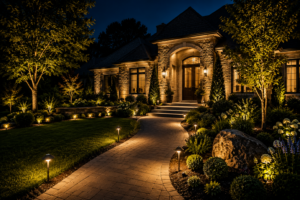
Why Front Yard Landscape Lighting Is Important
The function of the outdoor lighting is twofold. First, it increases the area’s utility, and second, it enhances the landscape’s beauty. In the case of outdoor lighting, since you can use the area at night as well, you will find that it creates a warm, pleasant environment.
In fact, apart from making the landscape more attractive, outdoor lighting also helps enhance security. This makes homeowners realize the importance of landscape lighting ideas for the front of the house.
Pathway Lighting Creates a Welcoming Entrance
Some of the most successful front yard landscape lighting ideas include installing pathway lights along sidewalks and at other entrances. Lighting helps guide guests towards the main entrance and adds to the warm, welcoming feeling at their place. It is important to place such lights with care so as not to produce excess light.
Pathway lights work better when blended into the landscaping. They help to illuminate curvy sidewalks, garden borders, and steps, among others.
Use Uplighting to Highlight Trees and Landscaping
When the sun sets, many features, such as trees, become invisible, even though they are very important for front landscape lighting ideas. Uplighting uplights the feature to emphasize texture, shape & natural movement. Ornamental trees, shrubs & decorative plant material can become focal points when well-lit with uplighting.
Large trees can create dramatic effects when several light sources are placed around their base. Smaller plants can be uplit with softer light to add depth to the yard without creating excessive brightness. If included as a landscape lighting for the front of house, this installation method will provide visual interest by creating dimension in the landscape at night.
Emphasize Architectural Features With Accent Lighting
A house’s character is largely dependent on its architectural features. However, these features are not as easy to spot at night. Accent lighting can be used to focus attention on architectural features, such as stonework, columns, entranceways, or other ornamental elements.
Spotlights and directional fixtures create a focal area without illuminating all surfaces excessively, lending sophistication to home exteriors and enhancing depth perception.
Accent lighting properly placed around the exteriors of residences will help keep architectural details visible for long periods after sunset.
Layer Different Lighting Types for a Balanced Look
Typically, Exterior lighting that creates beautiful outdoor environments is not achieved with a single type of fixture. Rather, the layered lighting technique uses multiple light sources to create cohesive, evenly distributed lighting without stark contrasts across the entire property. As the name implies, layered lighting will create dimension throughout the property.
Common applications for layered lighting include:
- Ambient lighting is used for overall visibility along walkways
- Accent lighting to highlight landscaped areas and architectural features
- Task lighting is used along pathways and stairs
By combining these three types of light, the result will appear much more organic and polished. Layered lighting creates a complete overall atmosphere rather than drawing attention to specific fixtures.
Improve Entryways With Wall-Mounted Lighting
Both decorative and functional, wall-mounted fixtures help light entryways or garages and enhance the look of the home’s architecture. For example, modern sconces, lantern-style fixtures, and minimalist wall lights are popular styles that provide both decorative and functional lighting.
Wall-mounted fixtures also provide a sense of continuity to the exterior of the house when used with landscape lighting around planting containers or pathways. The resulting environment will be aesthetically pleasing and less focused solely on utility.
Illuminate Driveways Without Creating Glare
Driveway lights play a major role in improving safety and visually defining your yard’s curb. Properly illuminated driveways provide enough light to highlight edges/boundaries of your driveway, yet do not create excessive light/glare for vehicles driving on a lighted driveway.
Subtle perimeter fixtures will produce a cleaner, more elegant effect than brighter installations. Their purpose is to enhance visibility while remaining in harmony with the lighting in the area surrounding the driveway.
Create a Natural Effect With Moonlighting
Moonlighting is a form of outdoor illumination in which lighting is mounted high on trees to shine downward. The effect is a visual resemblance of natural moonlight filtered through the branches of the trees. With the moonlit effect, shadows appear softer and more organic than they do with traditional spotlights, and homes with mature trees will benefit particularly from this type of illumination. Moonlighting creates an ambient atmosphere without calling attention to individual light fixtures. They appear natural and unobtrusive while enhancing visibility.
Highlight Functional Features Around the Entrance
Some areas require more attention from the lighting designer, as this will make things easier for the homeowners and help their houses look good. Such areas may include house numbers, gates, mailboxes, and signage that enhance the property’s aesthetic value.
While these minor daytime details may not be as important at night, they become important visual elements. By lighting these types of features well, the lighting designer will have a better opportunity to provide a complete exterior lighting scheme.
Choose Warm-Toned LEDs for Better Ambiance
The overall warmth and welcoming feeling of a residence is affected by the color temperature of the outdoor lighting. Generally, warm LED lights will produce a more inviting and comfortable environment than cool white lights. Warm LED lighting works well with brick, stone and wood, as well as green plants, creating a harmonious, blended effect with other elements, resulting in an inviting, homey atmosphere.
In addition to performance advantages such as energy savings and extended life span, LED technology creates ambiance. With both performance and ambiance in mind, it has become common practice to install warm LED lighting as the primary form of front house landscape lighting.
Add Subtle Lighting to Garden Beds
Many gardens are an investment in landscaping, so you want to keep your garden bed visible both after dark and during the day. Establishing lighting to highlight the textures, seasonal colors, and layout of plants in the garden will enhance the area without overwhelming it.
Soft lights enhance the depth of your garden while providing enough contrast to preserve its natural elements. Often, a limited number of lights placed appropriately has a greater effect on the visual aspect of a landscape than an excessive number of lights spread across the entire landscape.
Include Security Lighting Without Losing Style
Many homeowners are still concerned about security lights, but today’s products not only provide functional illumination; they also offer a beautiful look when installed properly.
Some of the more popular ways of achieving this include;
- Install motion-activated sources around your home.
- Installing smart light sources, which can be programmed to come on at specific times.
- Use directional fixtures to minimize any indirect glare from light sources.
- Incorporating LED lighting into your landscaping.
All of these front house landscape lighting methods improve security while preserving the overall ambiance created by decorative lighting.
Common Mistakes to Avoid With Front House Landscape Lighting
Focusing on design rather than brightness has led to the demise of numerous outdoor lighting projects. Excessive light levels can reduce three-dimensionality and visual contrast in landscapes, and poorly positioned lights generally create glare. The omission of focal points could lead to excessive clutter, in which no feature can stand out.
Most successful landscape lighting ideas for the front of the house will concentrate on highlighting several focal points rather than attempting to light everything equally. Applying a more restrained approach usually results in a much more elegant/sophisticated end product.
How to Plan Landscape Lighting for the Front of Your House
To begin planning landscape lighting ideas for the front of the house, identify targets that need improved visibility and the elements that should receive emphasis. Pathways and other forms of architectural details will serve different functions in relation to the lighting design.
Another factor to consider is that the atmosphere is also critical. For instance, some would like to see a dramatic contrast in lighting, while others would prefer softer, more natural, understated lighting. Design criteria should be established before installation to ensure the design remains cohesive afterward.
Final Thoughts
The greatest front yard landscape lighting ideas combine use and beauty. Well-designed outdoor lights not only increase safety in your outdoor spaces but also highlight your landscaping and make Architectural features the center of attention at night. By using pathway lights, uplight fixtures, accent lights, etc., and carefully placing them, you will create a visual difference from ordinary lighting to a very inviting entrance to your home.
Your goal should not necessarily be to light up every area, but rather to add depth and accentuate the best features of your home’s exterior. The right lighting design will vastly improve your home’s facade and increase the warmth, safety and welcoming impression the property has throughout the year.